Carbon Nanotubes Carbon nanotubes are minuscule thin cylinders of carbon that are light, flexible and, very strong. They are usually used for nano-electric devices. Carbon nanotubes were discovered in 1991 by a Japanese scientist named Sumio Lijima. There are different types of carbon nanotube structures including single-wall, double-walled, triple-walled and multi-walled. Carbon nanotubes are being used in a variety of different places. Mainly for their strength they are being used with aircrafts, windmill blades and more to reinforce structures. To see more applications of carbon nanotubes click here. |
|

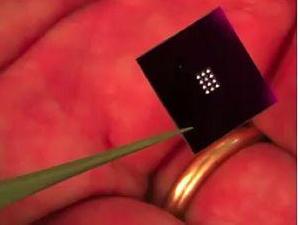
| Nanochip Nano products are products including nanoparticles. A nanoparticle is defined as the smallest unit that can still behave as a whole entity in terms of properties and transport. Today nanoparticles are making way on products of today. Nano products are everywhere from electronics to packaging and everything in between. Nano products of today include high power computers which are computers with chips with incredible powers sized down, quick charge batteries and even better screens. (Source 9) |
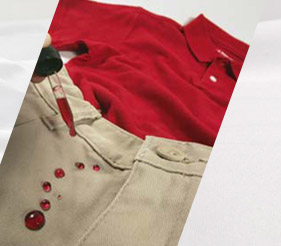
Clothing and Sunscreen Nanoparticles are enhancing sunscreen and clothing in many ways. Nanoparticles are being added to sunscreen to change its regular old large particles of zinc oxide or titanium oxide to microscopic particles which turn the think white paste of sunscreen to when it is added on it doesn't give the face a mask of white. Nanoparticles are being added to clothing to enhance them to protect the wearer from UV radiation by coating fabrics with a thin layer of zinc oxide nanoparticles. Also hair like nanoparticles are being added to help repel water and other materials making clothing stain resistant. (Source 10)
|
|

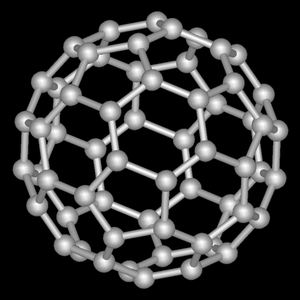
What is a buckyball? Carbon is the key to one of the most promising branches of nanotechnology. Most of the research being done today is based on carbon nanotubes, buckytubes and nanowires. The buckyball was named after Richard Buckminister Fuller but Robert Curl, Harold Kroto and Richard Smalley discovered it at the University of Sussex and Rice University in 1985. Buckyballs have a strength greater than that of a diamond prove that they can be used within armor. Yet the main use for buckyballs is for drug delivery. The buckyball encases the drug in the buckytube until it reaches the site where the drug is then released. (Source 12) |
|
l Home l Other Uses l Nanobots l Impacts l Innovators l Sources l
